
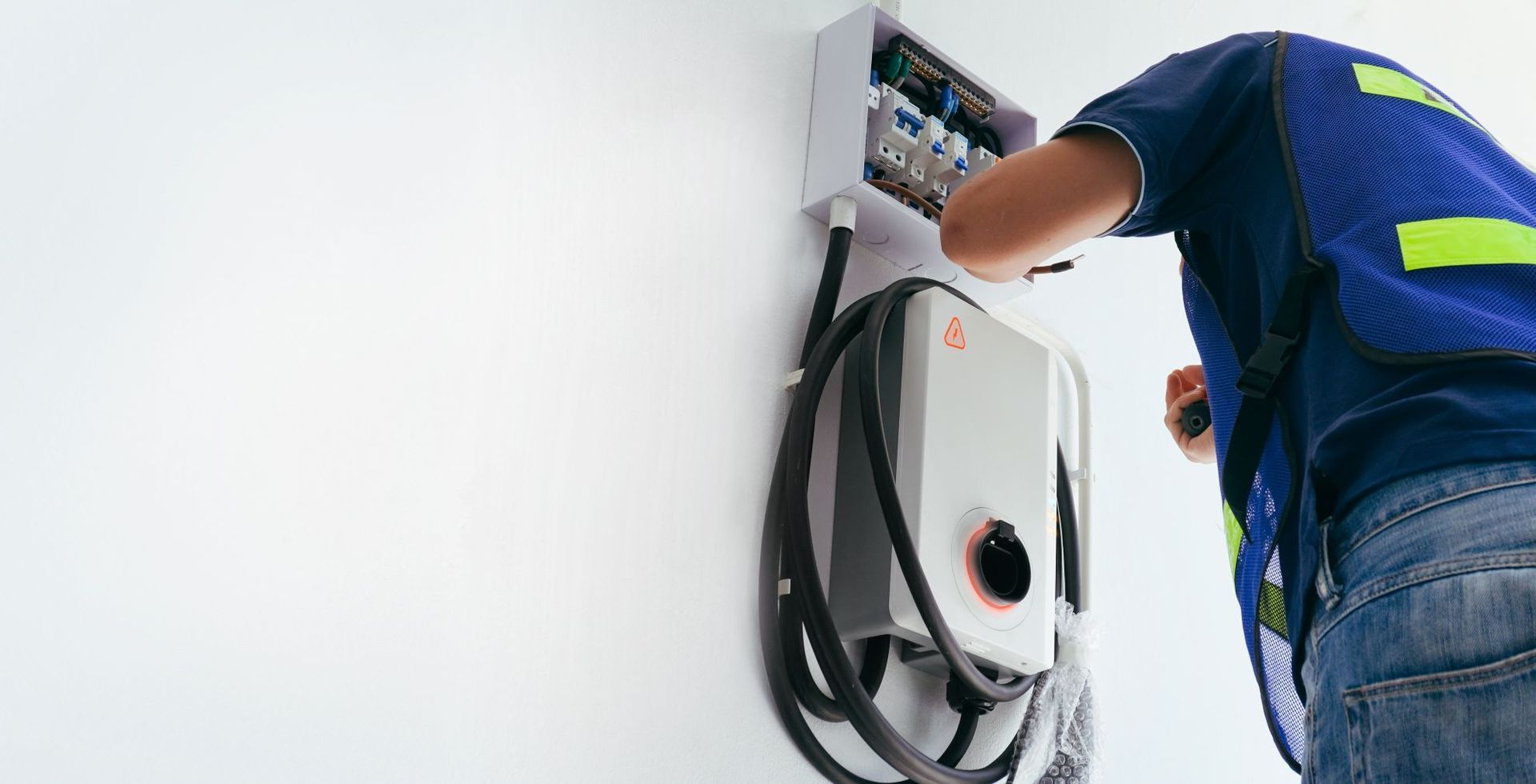
Home Charging Systems for Electric Vehicles
EV Charger Installation in Center Moriches for properties requiring Level 2 charging infrastructure and electrical system upgrades
Electric vehicles require daily charging that standard 120-volt outlets handle poorly, delivering only three to five miles of range per hour—inadequate for drivers covering typical commuting distances who would need 10 to 15 hours to fully recharge depleted batteries. Level 2 chargers operate at 240 volts and deliver 25 to 40 miles of range per hour depending on the vehicle's onboard charging capacity and the circuit amperage feeding the equipment. Kraken Electric, LLC installs residential EV charging systems throughout Center Moriches, evaluating electrical panels to confirm they can support the continuous 30 to 50-amp loads that Level 2 chargers require without exceeding service capacity or forcing upgrades to main panels and meter bases.
Installation begins with load calculations that add the charger's continuous draw to existing circuits serving air conditioning, electric heat, ranges, and other large appliances, determining whether the home's 100, 150, or 200-amp service has sufficient spare capacity. Dedicated circuits run from the panel to garage or driveway locations, terminating at NEMA 14-50 outlets for portable chargers or hardwired connections for permanently mounted units. Proper installations include appropriate wire sizing for the circuit length and amperage, ground-fault protection where required by code, and weather-resistant enclosures for outdoor mounting locations.
Request a pre-installation assessment to determine whether your home's electrical system can support EV charging or requires panel upgrades before charger installation.
Electrical Requirements for Reliable Charging
Level 2 chargers draw power continuously for hours during each charging session, unlike most appliances that cycle on and off or operate briefly—this sustained load means circuits must be sized for continuous duty at 125 percent of the charger's rated amperage to prevent overheating. A 40-amp charger requires a 50-amp circuit, while 32-amp models need 40-amp circuits, calculations that also account for voltage drop over the wire length between panel and charging location. Suffolk County permitting requires electrical inspections confirming installations meet National Electrical Code standards for EV supply equipment.
After installation, you'll connect the vehicle overnight and wake to a fully charged battery without visiting charging stations or waiting in line during weekly errands. Charging happens during off-peak hours when Long Island electricity rates drop, reducing fuel costs compared to both gasoline vehicles and public fast-charging stations that add premium pricing to per-kilowatt-hour rates. The charger mounts securely to garage walls or outdoor posts, with cable management preventing trip hazards and weather exposure.
Some installations also include smart chargers that schedule charging during specific hours, monitor energy consumption, and integrate with home automation systems—features that optimize charging costs and track usage patterns over time. Homes with solar arrays often coordinate EV charging with daytime solar production, using generated electricity rather than drawing from the grid during peak rate periods.
Questions About Residential EV Charging
Electric vehicle adoption throughout Center Moriches and Suffolk County communities drives demand for home charging infrastructure that eliminates dependence on public charging networks.
What determines whether a home needs a panel upgrade before installing an EV charger?
Total connected load calculations compare the sum of all circuits including the proposed charger against the main service rating—homes approaching 80 percent of service capacity require upgrades, since continuous EV charging combined with simultaneous air conditioning, cooking, and water heating can exceed panel ratings.
How does charging speed differ between 30-amp and 50-amp circuits?
A 40-amp charger on a 50-amp circuit delivers roughly 9.6 kilowatts and adds about 35 miles of range per hour, while a 24-amp charger on a 30-amp circuit provides 5.7 kilowatts and approximately 20 miles per hour—the difference matters for drivers needing rapid recharging between trips versus overnight charging.
When do outdoor charger installations require additional weatherproofing?
All outdoor installations need weather-resistant enclosures rated NEMA 3R minimum, though coastal Center Moriches locations benefit from NEMA 4X stainless enclosures that resist salt air corrosion better than standard painted steel boxes used inland.
Why do some electricians recommend hardwired chargers instead of outlet-based installations?
Hardwired connections eliminate the plug-and-receptacle connection point where loosening under repeated thermal cycling can create resistance and overheating, though outlet installations allow charger portability and easier replacement when upgrading to newer models.
What permits does Suffolk County require for residential EV charger installation?
Electrical permits are mandatory for all EV charger installations, requiring inspection to verify proper circuit sizing, overcurrent protection, grounding, and weatherproofing before the installation receives approval and connects to utility power permanently.
Kraken Electric, LLC handles complete EV charger installations for residential properties across Center Moriches, including electrical system evaluations, permitting, and inspections. Contact us to obtain an installation estimate based on your home's current electrical configuration and charging requirements.