
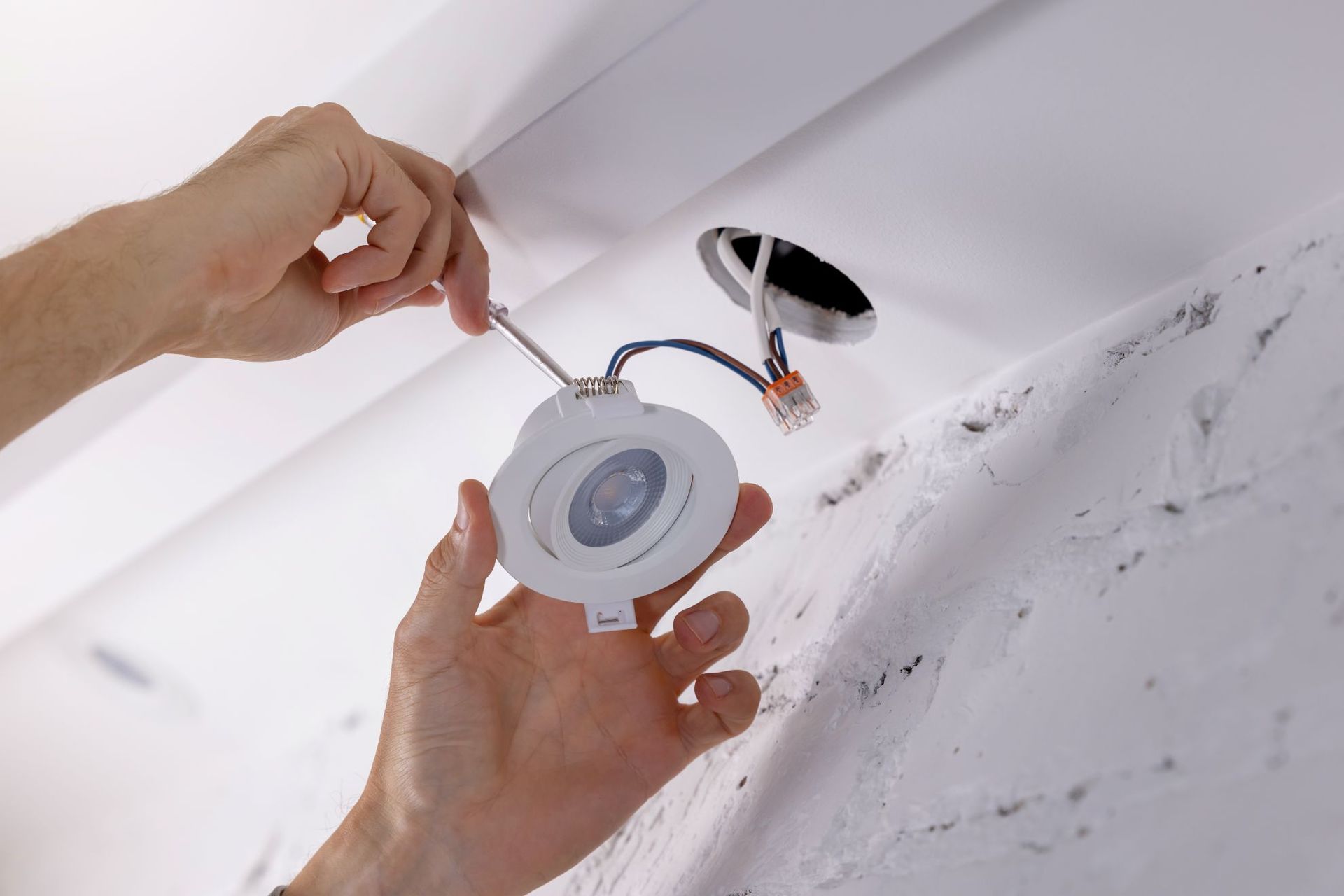
Lighting Systems Built Into Ceilings
Recessed Lighting Installation in Center Moriches for homes requiring improved brightness and modern interior lighting design
Recessed lighting eliminates the visual clutter of hanging fixtures and surface-mount lights while distributing even illumination throughout kitchens, living rooms, hallways, and finished basements. Each fixture sits flush with the ceiling, directing light downward in focused beams that highlight specific areas or spreading it wide to fill entire rooms. Kraken Electric, LLC installs recessed lighting throughout residential properties in Center Moriches, coordinating fixture placement with furniture layouts, task areas, and architectural features that benefit from dedicated illumination.
Installation requires cutting ceiling openings sized to housing dimensions, running electrical cable between fixtures and switches, and securing IC-rated or non-IC housings depending on insulation contact in attic spaces. LED retrofit kits install into existing housings when homeowners want efficiency upgrades without full fixture replacement, though new construction often benefits from integrated LED recessed lights that eliminate separate bulb assemblies entirely.
Request a lighting consultation to plan fixture placement that provides adequate coverage without creating harsh shadows or unlit gaps between beams.
Planning Fixture Layout for Balanced Coverage
Proper recessed lighting layout calculates fixture spacing based on ceiling height and beam spread angle—fixtures spaced too far apart leave dark zones between pools of light, while excessive fixtures create overlapping hotspots and unnecessary energy consumption. Four-inch fixtures work well in hallways and smaller rooms, while six-inch housings provide the output needed for kitchens and living areas with higher ceilings. Adjustable trim allows aiming light toward walls or specific features rather than only straight downward.
After installation, rooms appear brighter without the visual interruption of hanging fixtures or the limited coverage of single ceiling-mount lights. You'll notice even illumination across countertops where meal preparation happens, focused task lighting over seating areas, and hallway visibility that eliminates shadowed corners. Dimmer compatibility allows adjusting intensity throughout the day, reducing glare during evening hours while maintaining full brightness when detailed tasks require it.
Energy-efficient LED recessed lights produce minimal heat compared to older incandescent housings, reducing cooling loads during summer months and eliminating concerns about insulation contact in attic spaces. Fixture selection also considers color temperature—warm white for living spaces and bedrooms, neutral or cool white for kitchens and workshops where color accuracy matters.
Common Questions About Recessed Lighting Projects
Homeowners in Center Moriches frequently upgrade to recessed lighting during remodeling projects or when replacing outdated fixtures that no longer match interior design preferences.
What's the difference between IC-rated and non-IC recessed housings?
IC-rated housings allow direct contact with ceiling insulation without overheating, while non-IC fixtures require three-inch clearance from insulation to dissipate heat safely—IC-rated installation matters in finished attic spaces and upper-floor ceilings with insulation above.
How many recessed lights does a room need for adequate brightness?
General calculations suggest one fixture per 25 square feet for ambient lighting, though actual requirements depend on ceiling height, fixture output measured in lumens, and whether other light sources supplement recessed fixtures in the space.
When should lighting circuits be separated from outlet circuits?
Dedicated lighting circuits prevent situations where tripped outlets shut off lights, leaving rooms dark during electrical faults, and code often requires separate circuits in kitchens where countertop outlets draw significant current from small appliances.
Why do some recessed lights require airtight housings?
Airtight housings prevent conditioned air from escaping through ceiling penetrations into attic spaces, reducing energy loss particularly important in Center Moriches homes where heating and cooling costs reflect Long Island utility rates.
What determines whether existing ceilings can accommodate recessed lighting?
Joist spacing, insulation depth, and clearance above the ceiling determine whether standard housings fit—shallow ceiling cavities may require remodel housings that need less vertical space, while some locations conflict with ductwork or structural members requiring fixture repositioning.
Kraken Electric, LLC provides recessed lighting design and installation for residential properties throughout Center Moriches, creating lighting layouts that match how each space is used. Contact our office to schedule a lighting assessment for your home's interior upgrade needs.