
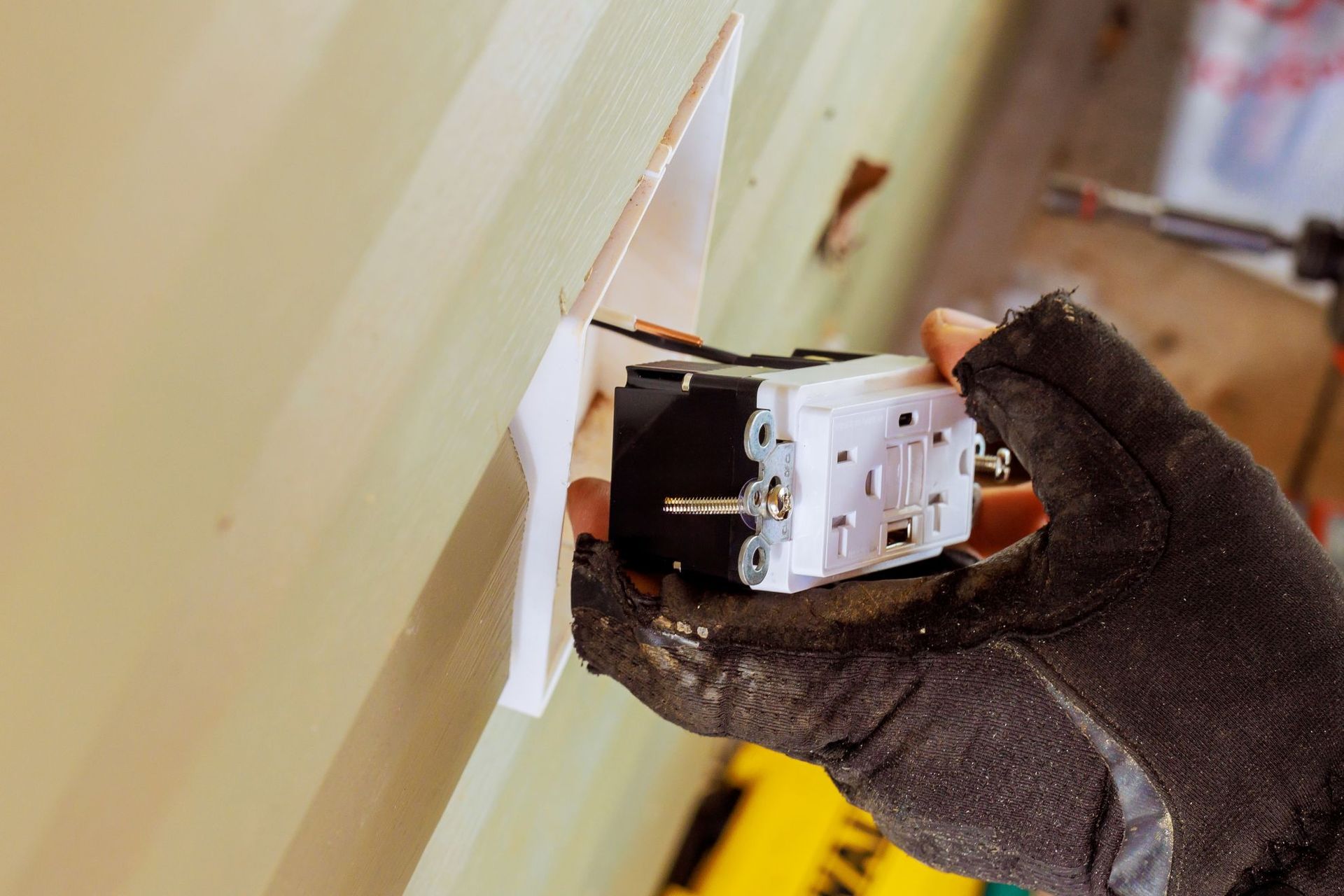
Protection Against Shock in Wet Areas
GFCI Outlet Installation in Center Moriches for kitchens, bathrooms, garages, and outdoor locations requiring ground-fault protection
Ground-fault circuit interrupter outlets detect current imbalances as small as five milliamps—the amount that flows when electricity finds an unintended path through water or a person—and disconnect power within 1/40th of a second before serious injury occurs. Moisture-prone areas create shock hazards when appliances develop internal faults or when wet hands contact energized metal surfaces, conditions where standard breakers provide no protection since fault currents remain below the 15 or 20-amp threshold needed to trip them. Kraken Electric, LLC installs GFCI outlets throughout residential properties in Center Moriches, replacing outdated two-prong and standard three-prong outlets in locations where code now mandates ground-fault protection.
Each GFCI outlet monitors current flow between hot and neutral conductors, tripping instantly when a ground fault diverts even a small amount of current away from the intended circuit path. Installation involves wiring the outlet so it protects itself and any downstream outlets on the same circuit, though some installations use GFCI breakers at the panel to protect entire circuits rather than individual outlet locations.
Schedule an electrical safety evaluation to identify which outlets in your home require GFCI protection under current code standards.
Where Code Requires Ground-Fault Protection
Current electrical code requires GFCI protection for all outlets within six feet of sinks, all bathroom outlets regardless of distance from water sources, all garage outlets except dedicated appliance circuits, all outdoor outlets, all crawl space and unfinished basement outlets, and all kitchen countertop outlets serving the areas where small appliances operate. These requirements reflect decades of shock injury data showing that these locations account for the majority of residential electrocution incidents.
After GFCI installation, outlets in bathrooms, kitchens, and outdoor areas continue delivering power for hair dryers, coffee makers, and yard tools while monitoring for dangerous ground faults that standard outlets ignore. You'll notice GFCI outlets include test and reset buttons on their faces, and monthly testing confirms the internal sensing mechanism still functions correctly by creating an intentional imbalance that should trip the device immediately.
Older homes in Center Moriches often retain original outlets in locations that now require GFCI protection, creating situations where insurance inspections or home sales flag safety deficiencies requiring correction. GFCI outlets also prevent nuisance tripping caused by appliances with minor leakage current—newer GFCI devices include better filtering that distinguishes between dangerous ground faults and harmless electrical noise from motors and electronics.
Answers to Frequent GFCI Questions
Ground-fault protection installations in Center Moriches homes address both code compliance requirements and practical safety concerns in areas where moisture contact creates ongoing shock risks.
What causes GFCI outlets to trip when nothing is plugged in?
Internal component failure, moisture infiltration in outdoor boxes, or damaged wiring insulation creates ground faults even without connected devices—persistent tripping requires troubleshooting to identify whether the GFCI itself failed or whether actual faults exist in downstream wiring.
How does a single GFCI outlet protect multiple downstream outlets?
When wired correctly, the line terminals connect to incoming power and load terminals connect to outgoing wires serving additional outlets, so any ground fault detected at downstream locations triggers the upstream GFCI—improper wiring reverses this protection, leaving downstream outlets unmonitored.
When should GFCI outlets be replaced during routine maintenance?
GFCI devices should be replaced after 10 to 15 years regardless of whether they still trip during testing, since internal components degrade over time and may fail to detect ground faults even when test buttons still function normally.
Why do some appliances trip GFCI outlets during startup?
Motors, heaters, and compressors create brief current surges during startup that older GFCI devices sometimes misinterpret as ground faults, though modern GFCI outlets include surge tolerance that prevents nuisance tripping from normal appliance operation.
What's the difference between GFCI outlets and GFCI breakers?
GFCI outlets protect only the specific circuit they're installed on and downstream connections, while GFCI breakers install at the panel and protect the entire circuit—breaker installation makes sense for circuits with multiple outlets requiring protection, while individual outlets work better for isolated locations.
Kraken Electric, LLC replaces outdated outlets with code-compliant GFCI protection throughout residential properties in Center Moriches, addressing safety requirements in kitchens, bathrooms, and outdoor areas. Arrange an installation appointment to upgrade outlets in moisture-prone locations before electrical inspections identify deficiencies.